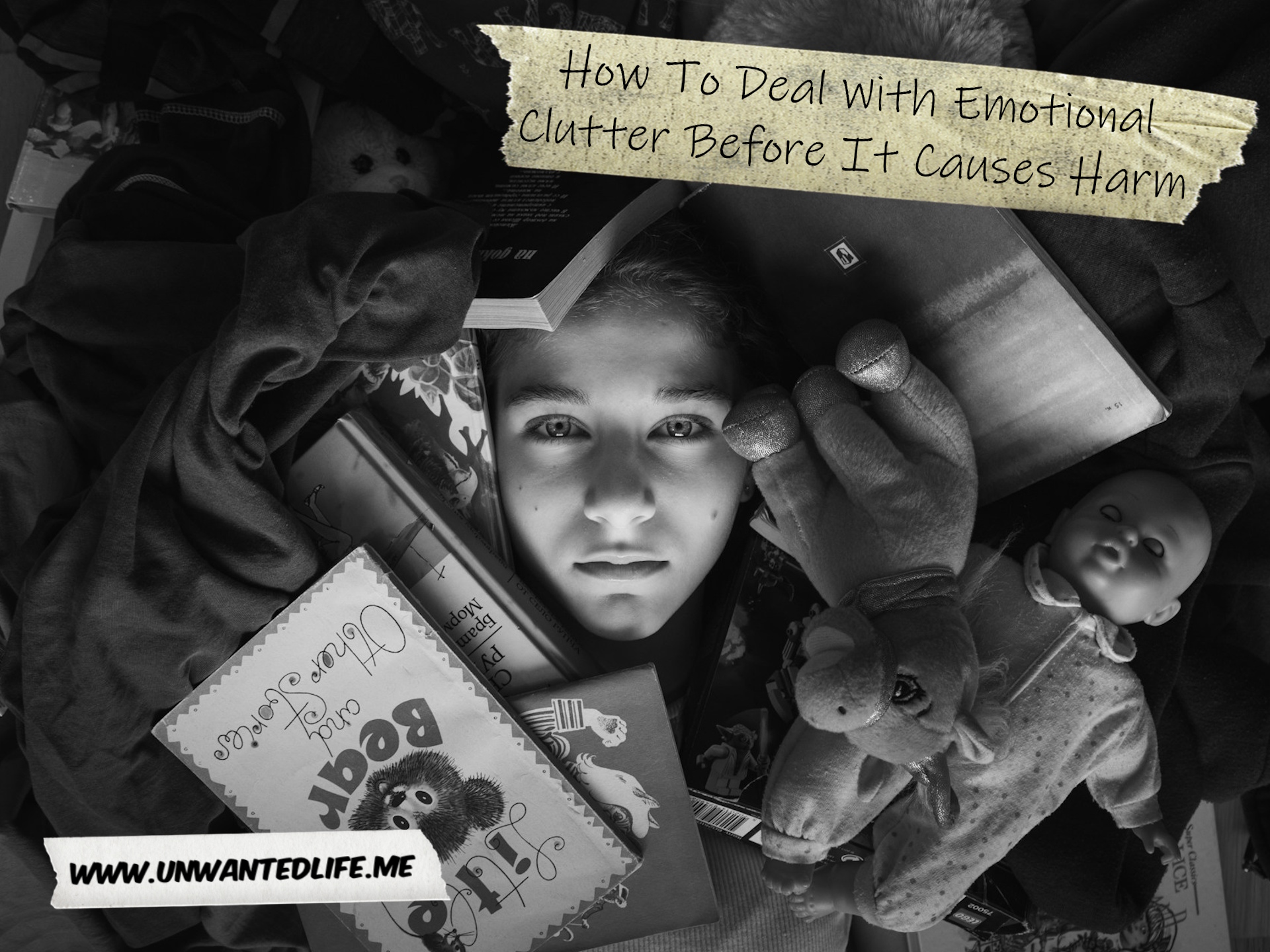
Some of us are fine with clutter, and for the most part, I am too. However, nothing feels better than when the clutter is gone, even if it only lasts a day. But when it comes to emotional clutter, we shouldn’t be fine with that. In this article, we will explain how to identify, process, and release these emotions and create healthier emotional habits.
Disclaimer: This is a sponsored article, but all thoughts and opinions are my own. Read my full disclosure here.
What Is Emotional Clutter?
Everyone knows how cluttered homes and workplaces can disrupt mental peace. A quote from Gretchen Rubin best encapsulates this, featured in an article by Alyssa Longobucco (2026), which describes the harm physical clutter can cause. She said, “I think of that clutter as ‘visual noise’ quietly humming in the background, reminding us of unfinished tasks, leaving us feeling distracted and less in control”.
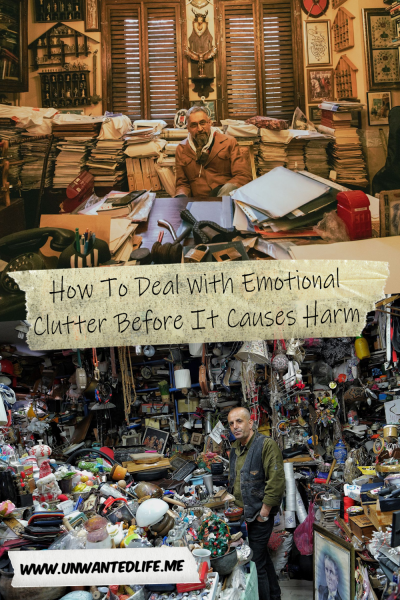
If visual clutter can do this, it’s not hard to imagine how unresolved rubble in the mind can affect our mental health. By that I mean, emotional clutter is the mental and emotional buildup of unresolved feelings, past experiences, and lingering thoughts that quietly weigh us down.
Just like physical clutter crowds a home, emotional clutter can cause us to feel not just mentally overwhelmed and chronically stressed, but also affect our concentration, decision-making, and motivation, and cause persistent negative thoughts and self-criticism, and lead to unpredictable emotional shifts (Petrovich, 2026).
Support for this comes from an article by Stephanie Thurrott (2024), where Jerimya Fox, a licensed professional counsellor and a doctor of behavioural health, was quoted as saying, “Emotional clutter is the persistent, negative thoughts we have about ourselves, our lives, and others. It can be anything that is weighing us down emotionally, such as negative self-talk, grudges, toxic relationships, or unresolved issues”.
Many people bear the load of emotions they no longer need, often without realising the toll it takes. This makes early detection important because addressing emotional clutter early can prevent burnout, anxiety, and emotional fatigue.
Identify The Unwanted Emotions In Our Emotional Clutter
A recent Gallup survey (reported by Ray, 2025, for Gallup) involved 145,000+ interviews across 144 countries and territories. It highlighted the global prevalence of emotional health problems, showing that global unhappiness began to rise a decade ago.
According to the study, 39% of adults stated that they worried a lot the previous day. Nearly 37% said they experienced stress, 26% reported feeling sadness, and 22% admitted to feeling angry. These numbers suggest that the world is struggling to live with emotions burdening minds and causing our unhappiness.
The first step in clearing emotional clutter is recognising what we are holding onto. These emotions often include guilt, resentment, fear, regret, or unresolved grief. They may manifest subtly through irritability, overthinking, or emotional exhaustion. Instead of ignoring these signals, we should take time to reflect and identify what is troubling us.
For example, guilt and regret often stem from past mistakes or unfulfilled expectations. It locks us into “should-have” thoughts, which are a cognitive bias that anchors us to the past and hinders our ability to move forward. Who needs that kind of weight to carry around?
Another example of unhealthy emotional clutter is shame. Shame can be deeply tied to feeling like we’re not “doing enough”, often fueled by comparisons and societal pressures. It can manifest as self-loathing or the belief that we are a failure.
Although a little shame can be healthy as a basic survival strategy to make sure we don’t harm the collective good, too much can become a serious problem, just like with any emotion. They all play a role, but too much of any emotion is unhealthy.
How To Declutter Our Emotional Clutter
Acknowledge what we’re carrying
If we want to let go of our emotional clutter, we need to recognise what we’re holding onto, such as unresolved conflicts, lingering worries, unfulfilled goals, or unrealistic expectations (Petrovich, 2026). Thus, take time to reflect on and acknowledge our thoughts, feelings, and hidden sources of stress.
Practice intentional release
According to Ishler (2024), emotional baggage is like trauma trapped within our bodies, which can affect how we think and feel, but also affect us physically, such as causing us to develop poor posture.
Unfortunately, letting go of emotional clutter requires conscious effort. Intentional release involves actively processing and releasing emotions rather than suppressing them. There are several ways to do it. We can try writing letters to ourselves, practising forgiveness, engaging in meditation, or expressing emotions through creative outlets.
Physical actions, such as decluttering our environment, can also support emotional release by reinforcing a sense of renewal. The goal is not to forget experiences but to reduce their emotional grip on us. Regular emotional check-ins and release practices can help prevent our emotional clutter from building up. This helps us to move forward with greater clarity and freedom in our daily lives.
Journaling
Journaling is always a great go-to for issues like this, as it allows us to reflect while also keeping our minds from racing and feeling overwhelmed. This can also be a great way to explore and acknowledge the things we’re carrying.
Mindfulness
Mindfulness, or simply pausing during emotional reactions, can help identify patterns. Ask ourselves what we’re feeling and why it persists. While it can often feel like we don’t have time for mindfulness or meditation, it can be an easy activity to use that can help improve our quality of life.
Even if we just focus on our breath for a few minutes, do a body scan to find where we’re feeling tense, or just go for a walk, such practices can help regulate our emotions and reduce stress (Thurrott, 2024). If we can walk in nature, such as a park, even better, as studies show that nature can also reduce our feelings of stress.
Another benefit of mindfulness and meditation is that we don’t need to clear our minds, because where our mind gravitates to can show us where our sources of stress and worry lie.
Naming our emotions
Naming our emotions can help us figure out what we’re feeling, because we can often feel several conflicting feelings at once. Therefore, this can help provide clarity, reduce their intensity, and give us control over them. Awareness also allows us to distinguish between emotions that serve us and those that hinder our wellbeing, so we can intentionally let go of the latter.
Challenge expectations
It’s all too easy to live life by the expectations of others, whether it’s family or society, but they don’t always align with our values. Sometimes we can also develop expectations that are unhealthy for us from our experiences and those around us.
However, that doesn’t mean we have to let these expectations define us. Instead, challenge these expectations, and if they’re not benefiting us, consider letting them go or changing them so they do benefit us.
For example, children can often develop the expectation that doing well academically is the be-all and end-all, which means if they don’t live up to getting great grades, their world can crumble. In extreme cases, this has led to people taking their lives.
But grades aren’t as important as they’re made out to be. People often do better in life without academic success, and there are always retakes if a certain grade is needed. After all, a 69-year-old South Korean woman passed their driving test on their 960th attempt (RAC, 2025). Sometimes things take longer for some of us, but that’s ok. That’s life.
Core beliefs
When we’ve lived with emotional clutter weighing us down for quite a while, it can cause us to develop unhealthy or maladaptive core beliefs. Therefore, it can be a worthwhile activity to explore what our core beliefs are, which in turn can help us overcome our emotional clutter. Check out my article on core beliefs to figure out how to make them healthy again by clicking here.
Positive reinforcement
As we make progress toward clearing our emotional clutter, add some positive reinforcement. Give ourselves a small reward or share our wins with our social support network. Positive reinforcement like this is a simple trick that helps us stay committed to emotional decluttering (Thurrott, 2024).
Challenge negative thought patterns
Emotional clutter often builds when negative thoughts repeat unchecked. Thoughts such as “I’m not good enough” or “I’m useless” can become mental habits, twisting how we interpret ourselves and the world.
When these thoughts appear, take a moment to ask ourselves whether they are truly accurate or helpful (Petrovich, 2026). Reframing them with a more balanced perspective can reduce their emotional weight. We can also challenge these thoughts by putting our thoughts on trial.
Boundaries
Emotional clutter often accumulates when boundaries are unclear or ignored. Setting firm emotional boundaries means recognising our limits and protecting our mental wellbeing. It’s also important to remember that people may not be aware that they’ve crossed one of our boundaries, as we can all be oblivious if we’re not told.
An example of a situation where we might have to make someone aware of our boundaries comes from Marais (2024): should we find ourselves with a friend who “trauma dumps” on us every time we meet. We can explain empathetically that we’re going through our own struggles at the moment, and that we might not be able to support them the way they expect.
The process of setting boundaries can sometimes be tricky, but worth it. Learning to say “no” when necessary is a life skill we all need. It can help to start small with low stack situatiosn when learning to say “no” to things.
It can also help to limit exposure to negative influences, as they may be less likely to value our boundaries. For example, abusive people may be unwilling to accept boundaries if it stops them getting their way.
It can also help to avoid taking responsibility for others’ emotions, because that’s not our job. We can only take responsibility for our own emotions. Realising this can help us avoid being stuck in unhealthy situations.
Healthy boundaries are not about distancing ourselves from people but about maintaining balance in relationships with them. Therefore, communicate our needs clearly and consistently without guilt or hesitation.
Over time, boundaries reduce emotional clutter and overwhelm and create space for healthier interactions. They also help reinforce self-respect, making it easier to prioritise our emotional wellbeing.
Control
We often like to think we can control anything if we try hard enough. But this just isn’t the case. Try not to get stuck worrying about things beyond our control, which can quickly fill our mental space with unnecessary stress (Petrovich, 2026).
Instead, figure out what is within our control and what isn’t, and take the appropriate steps. While many people crave certainty, accepting uncertainty can be freeing and is the only option in some cases. For things within our control, problem-sovle them and take action. We can also learn how to handle bad news to further help us deal with situations outside of our control, because we can control our responses.
Professional help
Sometimes emotional clutter runs deeper than self-reflection can resolve. In such cases, seeking professional support is a practical solution. Therapists, counsellors, and mental wellbeing coaches are trained to help identify complex emotions and provide coping strategies tailored to our situation. Professional guidance can also help identify underlying patterns, such as trauma or chronic stress, that contribute to emotional clutter building up.
Furthermore, many nurses also specialise in the mental health field with advanced credentials like psychiatric mental health practice. The availability of MSN-PMHNP online programs has made this a popular career advancement strategy for professionals looking to move on from bedside roles.
According to Walsh University, this flexible pathway enables qualified nurse practitioners to provide behavioural health support to patients across diverse age groups. In fact, registered mental health nurses (RMNs) are common in the UK.
For someone dealing with heavy emotions, having professional help means moving a step ahead to maintain balance. Professionals offer a safe, non-judgmental space to process feelings that may be difficult to confront alone or to discuss with our loved ones. Sometimes it’s just easier to talk to someone with no skin in the game.
FAQs
Why do people hold on to emotions?
People hold on to emotions because they often attach meaning, identity, or unresolved questions to them. Fear of forgetting, lack of closure, or belief that holding on provides control can reinforce emotional attachment. Additionally, some emotions become habitual, making them difficult to release without conscious effort and awareness over time.
How to let go of sentimental clutter without regrets?
Letting go of sentimental clutter involves honouring the memory without keeping everything attached to it. Focus on preserving meaning rather than objects or emotional weight. Take photos, write reflections, or keep a few meaningful items. Accept that memories remain even as physical or emotional attachments diminish over time.
Does talking to someone about your emotions help?
Talking to someone about our emotions helps by providing perspective, validation, and emotional relief. Verbalising feelings makes them easier to process and understand. A trusted person or professional can offer insights we may not see ourselves, reducing emotional burden and helping us move forward with clarity and support.
Key Takeaways On Emotional Clutter
| Aspect | Key data/insight | Takeaway |
| Global worry | 39% of adults reported worrying a lot (Ray, 2025) | Worry is the most common emotional burden worldwide |
| Stress | 37% experienced stress the previous day (Ray, 2025) | Chronic stress contributes to emotional clutter |
| Sadness | 26% reported feeling sad (Ray, 2025) | Unprocessed sadness can affect emotional wellbeing |
| Anger | 22% admitted feeling angry (Ray, 2025) | Lingering anger can lead to emotional exhaustion |
| Managing emotional clutter | Identify emotions, seek professional help, practice intentional release, and set healthy boundaries | Regular emotional maintenance improves resilience and mental health |
Summary
Dealing with emotional clutter is an ongoing process that requires awareness, intention, and consistent effort. These steps can help us prevent emotional buildup from affecting our wellbeing. Just like maintaining a clean living space, managing emotional clutter requires regular attention. Small, intentional steps can create lasting change, helping us feel lighter, more focused, and better equipped to handle life’s challenges with resilience and balance.
As always, leave your feedback in the comments section below. Also, please share your experiences with emotional clutter in the comments section below as well. Don’t forget, if you want to stay up-to-date with my blog, you can sign up for my newsletter below. Alternatively, click the red bell icon in the bottom right corner to get push notifications for new articles.
Lastly, if you’d like to support my blog, please find the PayPal and Ko-fi donation payment options below. Until next time, Unwanted Life readers.
References
Ishler, J. (2024, August 19). How to Release ‘Emotional Baggage’ and the Tension That Goes with It. Healthline. Retrieved from https://www.healthline.com/health/mind-body/how-to-release-emotional-baggage-and-the-tension-that-goes-with-it.
Longobucco, A. (2026, February 3). Your Home Has an “Emotional Geography”—Understanding It Could Make Decluttering So Much Easier. Real Simple. Retrieved from https://www.realsimple.com/emotional-geography-home-decluttering-11993485.
Marais, S. D. (2024, October 14). How to set different types of healthy boundaries. Psych Central. Retrieved from https://psychcentral.com/health/how-to-set-boundaries-with-kindness.
Petrovich, B. (2026, March 13). Spring cleaning for your mind: letting go of emotional clutter. Ogden Psychological Services. Retrieved from https://www.opsutah.com/letting-go-of-emotional-clutter.
RAC. (2025, August 18). 69-year-old woman finally passes driving test after 960 attempts – costing more than £11,000. RAC. Retrieved from https://www.rac.co.uk/drive/news/motoring-news/woman-finally-passes-driving-test-after-960-attempts-costing-more-than-1100.
Ray, J. (2025, October 13). Tracking the world’s emotional health. Gallup. Retrieved from https://news.gallup.com/poll/695963/tracking-world-emotional-health.aspx.
Thurrott, S. (2024, January 08). How to Spot the Emotional Clutter in Your Life and Find Ways to Clear It. Banner. Retrieved from https://www.bannerhealth.com/healthcareblog/teach-me/how-to-spot-the-emotional-clutter-in-your-life.
To manage emotional clutter, I do journaling, fitness workout, and sometimes meet close friends to share with them how I’m currently feeling. Alhamdulillah, so far I managed my emotional clutter well. For journaling, I channel myself into my higher self. I act as if my higher-self is talking to the me now. That helps so well.
Sounds like a great way to manage your emotional clutter and overall wellbeing