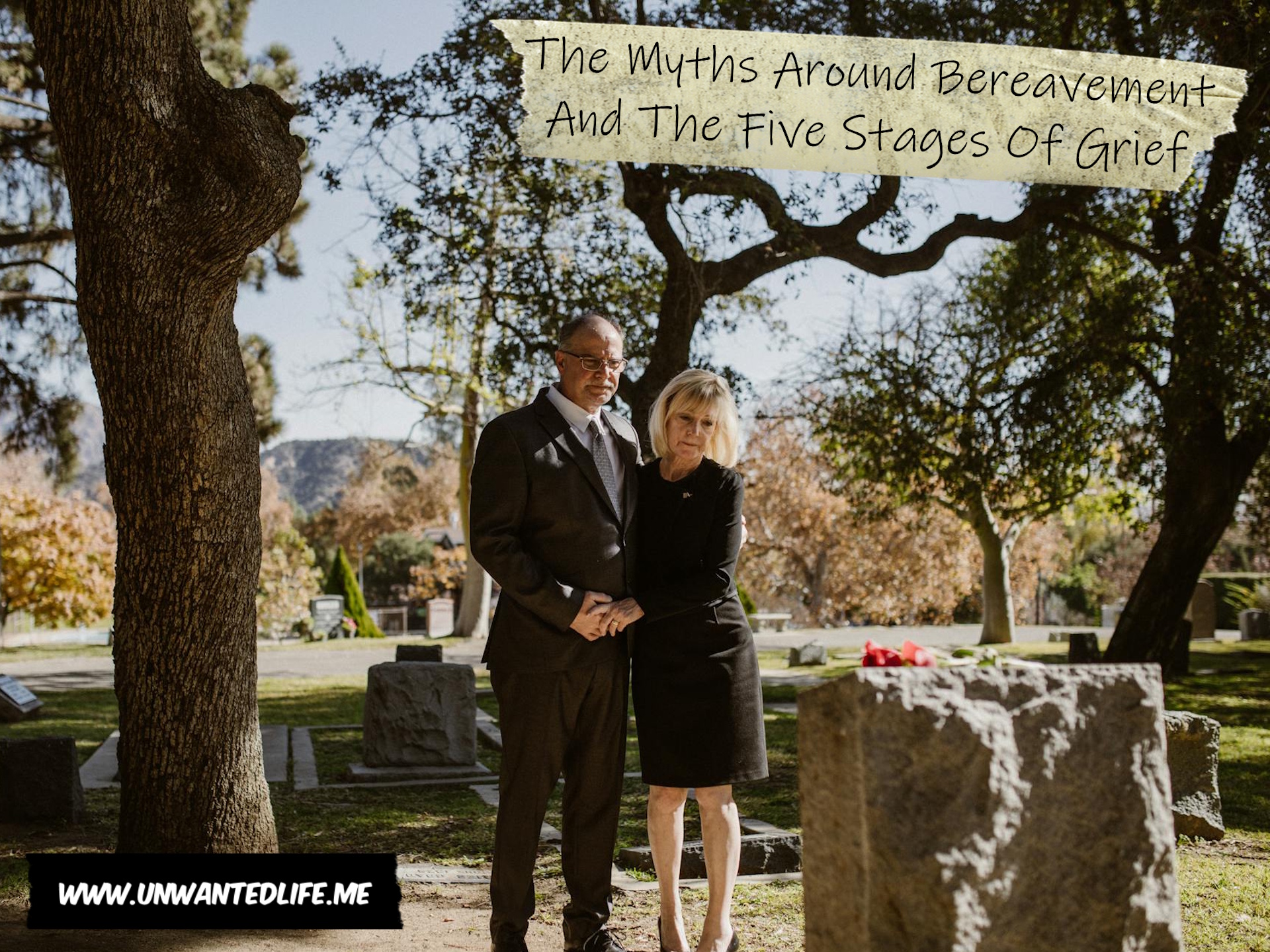
The concept of the “five stages of grief” is perhaps the most famous psychological framework in the world, but it is also one of the most misunderstood. What began as an observational way to talk about death has, over decades, morphed into a set of “rules” that often cause more anxiety than comfort for those who are grieving. I know it affected me negatively in my time of loss.
What Are the Five Stages Of Grief
Denial
This is where a person is meant to experience difficulty believing the reality of the loss, often feeling numb or in shock. Some people may carry on as normal at first, as if nothing happened (Cruse Bereavement Support, n.d.).
Anger
Frustration and rage directed at others, oneself, or even a higher power, questioning “Why me?”, which is a perfectly natural emotion to feel after someone we love dies. Losing a child or a partner with whom we had a whole future planned can feel cruel and unfair (Leicestershire Partnership NHS Trust, n.d.).
Bargaining
This stage is where we’re meant to try to make deals or promises, often with our god(s), hoping to reverse or postpone the loss. People may make promises to do something or to stop doing something if that would bring the person back (Marie Curie, 2022).
Depression
Losing someone dear to us can lead to a deep sense of sadness, hopelessness, and withdrawal as the reality of the loss sets in.
Acceptance
Coming to terms with the reality of the loss and learning to live with it, not necessarily meaning happiness. Thus, that doesn’t mean we stop feeling the pain of that loss, just that we’re not denying the reality of the situation (Clarke, 2025).
The Myths Surrounding The Five Stages Of Grief
Myth 1 – The five stages of grief are a “Roadmap” for the bereaved
The five stages of grief were first published by Elisabeth Kübler-Ross in 1969 in her book ‘On Death and Dying‘, which was based on her work with terminally ill patients facing their own mortality (Thompson, 2026).
The five stages of grief were never intended to be a universal roadmap for people experiencing the loss of a loved one. Thus, when applied to bereavement, these five stages of grief often fail to account for the unique, messy, and lifelong nature of losing a loved one.
Myth 2 – We go through them in order (linearity)
Although the five stages of grief are found in the media and are often still frequently accepted, there is a lot of criticism of this model (Avis, Stroebe, and Schut, 2021). This isn’t a surprise given that it’s used out of context. The problem with this is how it can cause people to think they’re not grieving in the right way. This is how I felt when my nana died, and it caused me a lot of psychological anguish over the fact that I didn’t seem to be grieving at all.
It might well be great if grief followed a nice, simple process as interpreted by the five stages of grief (Davis, 2023). It would make the experience cleaner and trackable. If only life were that simple.
The reality is that grief can be a rollercoaster, not a staircase. We might feel acceptance one morning and be hit by a wave of intense anger by lunch. Many people skip stages entirely or find themselves looping back to ones they thought they had finished (Thompson, 2026). We might not feel anything that one would associate with grief, and that’s ok to. For me, seeing my nana dying destroyed me, but knowing the pain had stopped was a relief. Same with my granddad.
The other problem with this myth surrounding the five stages of grief is that it might result in ineffective support for the person grieving (Avis, Stroebe, and Schut, 2021). Clinicians have also highlighted the negative consequences this had for the bereaved, something I’ve noticed in my therapy sessions as well. I’ve had to help a few clients reevaluate what they think grief is to help them heal.
Each person’s experience of grief is unique (Thompson, 2026). Furthermore, a person will experience grief differently in every situation of loss because every situation is different, and we change as people as we grow older.
Myth 3 – Acceptance means we’re “over it”
There’s a belief that once we reach the final stage, the pain stops, and we have achieved “closure”. Whereas the reality is that acceptance doesn’t mean were ok with what happened. It simply means acknowledging the reality that the person is gone and that our life has fundamentally changed. As many experts now suggest, we don’t “get over” grief; we integrate it. It becomes a part of our story rather than a problem to be solved.
Myth 4 – There is a “right way” to grieve
If we’re not crying or feeling depressed, we are in “denial” and will have a breakdown later, or if we’re not crying or feeling low, then we didn’t care about them. This was my issue with losing my nana, because I just wasn’t upset at all when everyone else around me was.
Research, such as that by Bonanno et al. (2002), shows that resilience is actually the most common response to loss. Many people experience minimal grief, where they’re deeply sad but continue to function well. Others may feel relief (especially after a long illness), which is a normal but often stigmatised emotion, and it shouldn’t be stigmatised.
Plus, there are cultural differences to consider as well (Thompson, 2026). For some cultures and religions, it isn’t a time to mourn, but to celebrate. Thus, let’s stop forcing the expectation that bereaved persons will, even should, go through the five stages of grief, because it’s harmful to those who don’t (Stroebe, Schut, and Boerner, 2017).
Modern Alternatives To The Five Stages Of Grief
Because the five stages of grief model isn’t really a thing, psychologists today often prefer models that describe the experience rather than the steps.
The dual process model
This model is about how a person experiencing loss can oscillate between “loss-oriented” state and “restoration-oriented” state. Both of which are healthy.
Gallois (2024) describes the loss-oriented state as the things that make us think about the loved one and their death. This can include thinking about how much we miss the person and looking at old photos. Whereas the restoration-oriented state is things we do that help us get on with our daily lives, distracting us from our grief, such as doing housework, going to work, and washing the car.
The key to this model is oscillation. This refers to how, when we’re grieving, we’ll move back and forth between the two states of loss-oriented and restoration-oriented, and that’s fine. Sometimes we don’t or can’t deal with the grief all at once, but at the same time, we can’t hide from our grief completely by trying to keep ourselves busy at all times.
Growing around grief
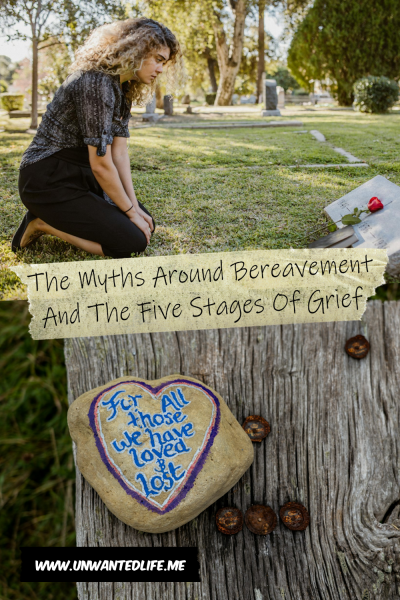
In this model, grief doesn’t actually get smaller over time. Instead, we grow larger. Our life expands with new experiences and people, making the grief feel like a smaller portion of our world.
This model challlenges to idea that we will eventually move on from grief, and instead acknowledges the ongoing presence of the love and pain of losing a loved one, while also acknowledging that we’ll continue to grow (The Loss Foundation, n.d.). Thus, life and grief exist side by side, but grief will feel smaller as our life grows, rather than actually becoming smaller or disappearing. This makes sense, as the memories of our loved ones stay with us.
Continuing bonds
Instead of “letting go” or seeking “closure”, this model encourages maintaining a healthy, internal relationship with the deceased through memory, legacy, and ritual. Similar to the growing around grief model, it accepts that grief never really goes away, as it becomes part of us, and it’ll shape our life story.
That doesn’t mean we’re going to be stuck in a never-ending cycle of feeling sad, as that grief can become more peaceful and often a positive presence. That’s because we still have the warm memories and the connection we have with the person we lost (Haley, 2018). This makes up a large part of my approach to supporting someone with the loss of a loved one. I like to end our sessions talking about some of those wonderful memories and their connection to the person they’re grieving.
Summary
The five stages of grief were never designed for helping people navigate the bereavement of a loved one, but were rather an observation and insight into how people with a terminal illness might react to their situation. There are better models out there tha explains grief, and thus show us how to be kind to ourselves so we can grieve in our own way. There is no right or wrong way to grieve.
Furthermore, the word “closure” is often unhelpful in bereavement, because it implies a door is shutting on the person we lost. This is something I plan to write about in the future.
As always, leave your feedback in the comments section below. Also, please share your experiences with the five stages of grief and grief in general in the comments section below as well. Don’t forget, if you want to stay up-to-date with my blog, you can sign up for my newsletter below. Alternatively, click the red bell icon in the bottom right corner to get push notifications for new articles.
Lastly, if you’d like to support my blog, please find the PayPal and Ko-fi donation payment options below. Until next time, Unwanted Life readers.
References
Avis, K. A., Stroebe, M., & Schut, H. (2021). Stages of Grief Portrayed on the Internet: A Systematic Analysis and Critical Appraisal. Frontiers in psychology, 12, 772696. Retrieved from https://doi.org/10.3389/fpsyg.2021.772696 and https://pmc.ncbi.nlm.nih.gov/articles/PMC8675126.
Bonanno, G. A., Wortman, C. B., Lehman, D. R., Tweed, R. G., Haring, M., Sonnega, J., Carr, D., & Nesse, R. M. (2002). Resilience to loss and chronic grief: a prospective study from preloss to 18-months postloss. Journal of personality and social psychology, 83(5), 1150. Retrieved from https://sites.bu.edu/deborahcarr/files/2020/09/bonanno-et-al-2002.pdf.
Clarke, J. (2025, October). How the Five Stages of Grief Can Help Process a Loss. Verywell Mind. Retrieved from https://www.verywellmind.com/five-stages-of-grief-4175361.
Cruse Bereavement Support. (n.d.). Understanding the five stages of grief. Cruse Bereavement. Retrieved from https://www.cruse.org.uk/understanding-grief/effects-of-grief/five-stages-of-grief.
Davis, D. L. (2023, March). Grieving is not that simple, and being better informed serves us far better. Psychology Today. Retrieved from https://www.psychologytoday.com/us/blog/laugh-cry-live/202303/stages-of-grief-the-harmful-myth-that-refuses-to-die.
Gallois, E. (2024, September). The dual process model. Funeral Guide. Retrieved from https://www.funeralguide.co.uk/help-resources/bereavement-support/the-grieving-process/the-dual-process-model.
Haley, E. (2018, Febraruy). A Grief Concept You Should Care About: Continuing Bonds. What’s your Grief?. Retrieved from https://whatsyourgrief.com/grief-concept-care-continuing-bonds.
Leicestershire Partnership NHS Trust. (n.d.). The five stages of grief. Leicestershire Partnership NHS Trust. Retrieved from https://www.leicspart.nhs.uk/mental-health/advice/the-5-stages-of-grief.
Marie Curie. (2022, November). Stages of grief: Are the five stages of grief true?. Marie Curie. Retrieved from https://www.mariecurie.org.uk/information/grief/stages-of-grief.
Stroebe, M., Schut, H., & Boerner, K. (2017). Cautioning Health-Care Professionals. Omega, 74(4), 455–473. Retrieved from https://doi.org/10.1177/0030222817691870 and https://pmc.ncbi.nlm.nih.gov/articles/PMC5375020.
The Loss Foundation. (n.d.). The Jar model of Grief – Growing around Grief (Lois Tonkin). The Loss Foundation. Retrieved from https://thelossfoundation.org/stages-of-grief/the-jar-model-of-grief-toni-griffin-overview.
Thompson, E. H. (2026, January). Stages of Grief. The Loss Foundation. Retrieved from https://thelossfoundation.org/stages-of-grief.
Grieving is hard. It take years to cure. Thank you for sharing this guide.
It certainty can be hard
When my grandma died everyone was telling me how to grieve her. It drove me crazy. Talk about PTSD later.