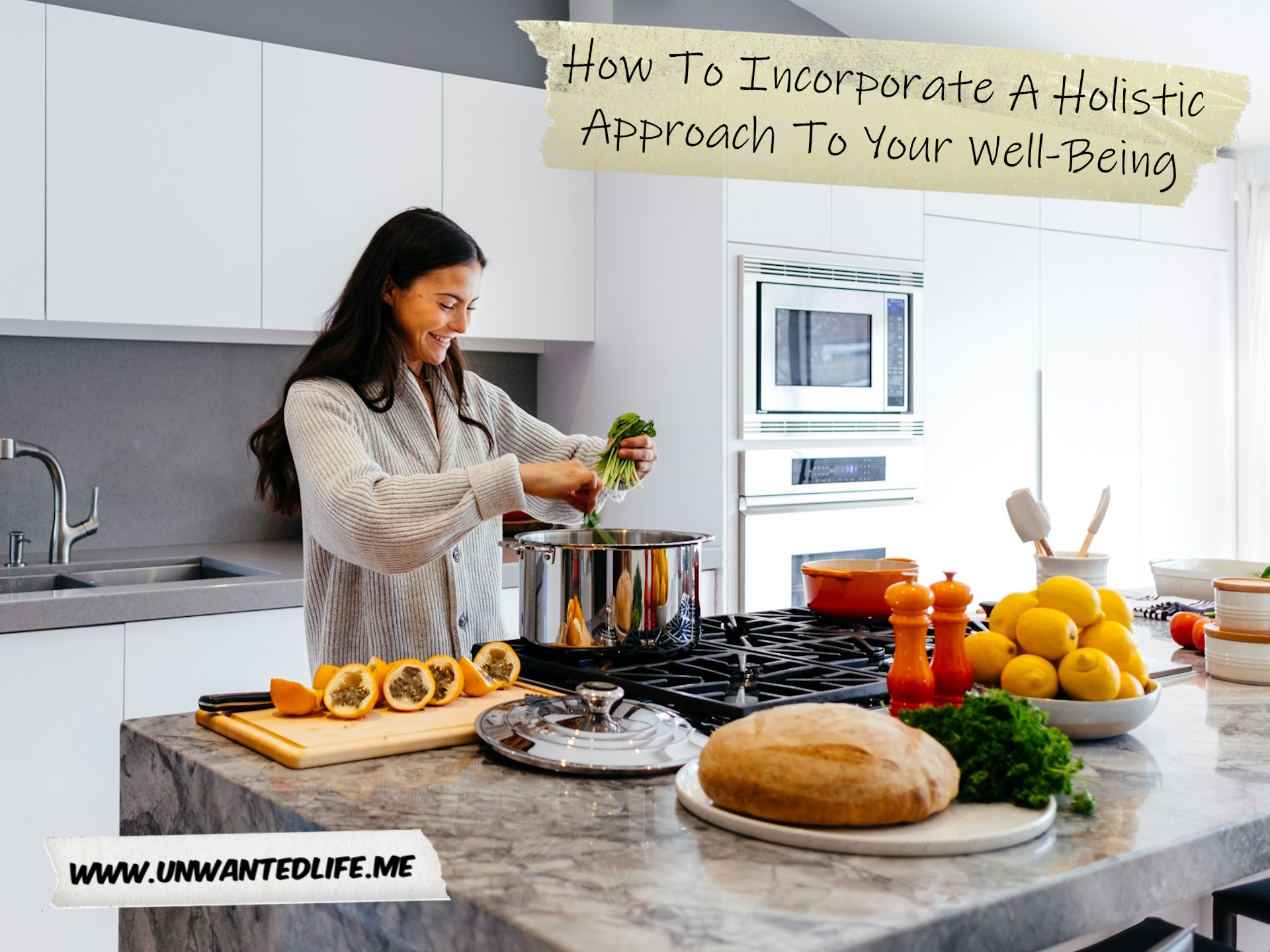
Today I thought I’d discuss the holistic approach to wellbeing, from the point of view of holistic healthcare. The reason for this is that we often only get support for our specific symptom or illness, and they rarely factor in the whole person and how things interact. Hopefully, this article will help you see the merits of an approach that seeks to challenge that binary view.
What Is The Holistic Approach?
Let me get this out of the way first: when I talk about a holistic approach, I’m on about a science-backed, whole-person approach to health and healthcare that factors in the body, mind, and spirit. Not stuff like naturopathic “physicians” (naturopaths) that use unsupported claims and alternative “medicines”.
In the medical field, a holistic approach is about seeing a person as a whole, and not just as a part or health symptoms, because often there’s a lot more going on. Factoring in a person’s values, beliefs, family dynamic, culture, and community (Kemper, 2000) can also be useful in tailoring the best treatments to the individual.
Warner (2024) would also argue that we need to consider emotional and societal aspects of our lives as well. There’s also the socio-economic aspect to factor in (Royal College of General Practitioners, 2025), because wealth, or lack thereof, plays a huge role in our wellbeing. And when it comes to our mental wellbeing in a holistic approach, we also need to consider our needs as well (NAMI Montgomery County Ohio, n.d.).
Sorry to disrupt the flow, although I’m not sure if my flow game has ever been strong in my articles, but that’s a conversation for a different time. When it comes to spirituality, I don’t just mean spiritual and religious beliefs, which might be important for some people. In this context, spirituality also includes a sense of meaning and purpose (Templeton, 2025), which can be an important driving force in our lives
Even health policies, preventative strategies, and health insurance need to be considered (Tomljenović, 2014). You deserve better access to healthcare, America.
It also means we don’t get tunnel vision regarding health issues, something that had been a huge roadblock to my health issues getting diagnosed. It’s also why my binge eating and unhealthy relationship with food is so difficult to overcome, because it’s not just about the food.
The human body is a complex and dynamic organism, affected by what we eat, the environment, our relationships, our culture, our human activities, and our genes (Tomljenović, 2014). There are estimated to be between 28 and 36 trillion cells in our bodies (Hatton et al., 2023) working together alongside bacteria to keep us alive. There’s a lot of parts in the biological machine we call our bodies.
So why would we think focusing on just one part of that rather than the collective whole is the be-all and end-all when it comes to our wellbeing (Sheehy, 2025)? A bad night’s sleep has a ripple effect across us; it’s not just a bad night’s sleep in isolation. We’ll feel more tired, we’ll have less ability to resist sugary foods, we may get angry sooner than we otherwise would, our reaction times slow, etc.
One of the fundamental principles of the WHO is that without mental health, there can’t be true physical health (Chisholm, 1951). Or, simply put, physical health and mental health are intertwined. You can’t have one without the other, and both influence each other. Some seventy years later, there is strong, substantial evidence of the bidirectional relationship between physical health and mental health outcomes (Kolappa, Henderson, and Kishore, 2013).
In today’s demanding world, even balancing success with our well-being using a holistic approach can be worthwhile (Warner, 2024). By that I mean that success can be easier to obtain when we factor in a proper holistic approach to our overall wellbeing and our goals.
Even though we’re all human, we’re all different in our own ways, even if it might not seem like it a lot of the time. As the Royal College of General Practitioners (2025) stated, as a general medical practitioner (GP), it’s important to be non-judgemental and acknowledge a patient’s thoughts, values, feelings, and behaviours in health improvement and self-management during illness and recovery.
The reason for this is that what might work for one person might not work for another (Royal College of General Practitioners, 2025). As someone who’s suffered from one eating disorder or another since my late teens, being told I should follow intermittent fasting (5:2 diet) for weight loss by a medical professional was pretty terrible advice.
I had been fasting for years and years to offset my binges. It had taken me two decades to get a more stable eating behaviour locked in, and that wasn’t by choice; my reactive hypoglycaemia symptoms dictated it, for the most part.
How To Integrate A Holistic Approach Into Our Lives
The five principles
Mind Darlington (n.d.) was kind enough to outline five key principles for integrating a holistic approach into our lives.
1. Connect
As a pack animal, humans are social creatures, and thus connections are the cornerstone of our wellbeing. Therefore, building and nurturing our social support network, such as relationships with family and friends, can profoundly impact our emotional health. To add this to our lives, we could make an effort to talk more with our colleagues, carpool (with or without karaoke), try to make new friends, or just start conversations with new people.
2. Be active
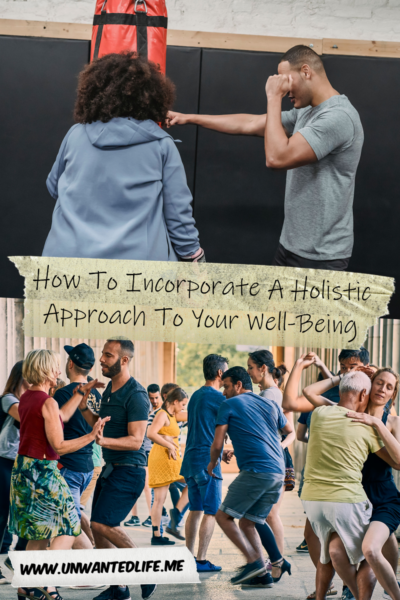
Physical activity isn’t just about fitness, as it can be a useful mood booster as well thanks to the endorphins exercise can release. This can be anything from adding a short walk to our day, dancing to music around the home, taking the stairs rather than the lift, getting off a stop early and walking the rest of the way, or making time for yoga.
3. Take notice
As mindfulness wants us to do more of, it’s about being present and fully engaged in the moment, as that can help enrich our daily experiences. Even if that’s just mindfully eating our breakfast. We can also practice mindfulness by paying attention to small things, like the tree in the garden or the sounds of the birds singing.
We just need to take a few moments each day to appreciate the beauty in our surroundings, which often gets overlooked. So maybe tomorrow we give our full attention to our friend when we talk to them, rather than letting our mind drift.
4. Keep learning
As I always say, lifelong learning and growth are important. Nurturing that curiosity helps to contribute to a sense of achievement and fulfilment. This could be reading, looking up new words and theories we’ve heard about, taking up a new hobby, or attending workshops or other training. It can all help to boost our self-esteem, keep our brains active, and help our lives have a sense of purpose and meaning. So embrace opportunities to learn and grow.
5. Give
Acts of kindness not only benefit others but it will also enhance our own wellbeing. Whether we’re engaging in random acts of kindness (#BeKind), trying to be more inclusive at Halloween, or doing something like volunteering. It all counts, and it’s also important to be kind to ourselves as well. Again, this can help foster a sense of purpose and meaning, but also a feeling of connection.
Focus
Start by focusing on one area at a time to build a strong foundation in that area. Then we can move on to the next area and do the same until we’ve built a house using all of them.
Body
- Focus on hydration by tracking how much water we drink throughout the day.
- Focus on movement, such as taking a 10-minute walk outside every day, especially after a meal, or adding micro-exercises throughout our day.
- Focus on sleep by committing to not looking at a screen 30-60 minutes before our target bedtime. Or trying other sleep hygiene tips.
Mind
- Focus on mindfulness by practising five minutes of mindful breathing or a simple guided meditation upon waking up in the morning, adding it to our morning routine.
- Focus on creating a stress reduction strategy, such as cutting back on doomscrolling and not answering work emails outside of our work hours.
- Focus on our emotional expression by setting aside some time each day to journal.
Spirit
- Focus on connection by reaching out to one friend or family member each week for a non-essential chat.
- Focus on a sense of purpose by allowing ourselves at least 15 minutes a week for a hobby we love, such as Warhammer or Lego.
Habit stack
When adopting a more holistic approach to our lives, it can be useful to habit stack on top of an existing routine. For example, adding drinking a half glass of water to our night routine, or a glass of water to every meal.
Feel our feelings
Allow ourselves to slow down and make space for ourselves, as life is already far more hectic than it needs to be (Warner, 2024). Work on developing good emotional health so we can navigate our feelings, rather than using alcohol or shopping as a way to mask (Templeton, 2025). Journaling can be good for this.
Art therapy
Art therapy can be a good way to express ourselves (NAMI Montgomery County Ohio, n.d.), and if done in a group, it has been shown to reduce anxiety and improve social skills. Warhammer has been shown to help people develop their social skills and make friends, either via playing the game or just enjoying the painting of the model.
Having a creative outlet can also benefit us by giving us a mindfulness activity, helping with self-awareness, self-exploration, and giving us a sense of empowerment.
Nutrition
Nutrition can be different for everyone, based on gender, height, ethnicity, etc., so if this is a road we want to explore, it may help to get a professional to help tailor our nutrition based on our differences. Or we can keep it simple and work towards having a more balanced diet (Templeton, 2025).
Healthy boundaries
Setting and maintaining clear boundaries, especially regarding work and our personal life, can make a big difference. It can help to have clear times for work and leisure, as it makes it easier to stick to them (Warner, 2024). It may not sound as sexy, but scheduling our downtime is a good way to avoid procrastination.
Spiritual
As I said earlier, this can look different for everyone, but the view I prefer is the more universal take on this, which is to work on our sense of meaning, purpose, and direction in life (Templeton, 2025). Take the time to work out what that is for us as individuals, rather than thinking we need to live up to someone else’s or society’s expectations in this regard, as that doesn’t lead to happiness.
For example, there’s a lot of pressure for people to have children, but that’s not for everyone. Maybe instead that sense of purpose comes from helping others or being creative; if so, that’s where we’re going to find our happiness.
Community support
Engaging with our community, such as surrounding ourselves with like-minded people, can provide encouragement, accountability, and a sense of belonging (Warner, 2024). This doesn’t mean we have to limit ourselves to our local community; if that works, then great, but it could also mean joining a Warhammer club or joining a book group.
Financial
Although it’s easier said than done nowadays, doing our best to live within our means and planning for our future appropriately can help reduce the negative effects of stress (Templeton, 2025). We shouldn’t feel ashamed of accessing support like debt advice if that will help us bring us peace of mind. We all need help sometimes.
Personal development
Dedicate time to personal development in whatever form that might take. Join an after-work class, attend an adult college course, read more, say yes to training opportunities or activities we might otherwise turn down.
Environmental
The role our environment plays in our wellbeing is often overlooked. But our immediate surroundings and our larger community can have profound effects on us (Templeton, 2025). For example, a toxic work environment is more likely to have a negative effect on us, rather than us being able to change that environment.
This is one of the reasons why it’s recommended to move somehere new when overcoming dependency issues. This is also why we often talk about the postcode lottery when it comes to our health as well. If we live in a run-down and high-crime area, or in an area with high pollution, then that’s going to have a big impact on our health outcomes.
Review and adapt
It can be useful to check in on our attempts to incorporate a holistic approach to our wellbeing on a regular basis to see what is working for us and what isn’t. If we find the new thing we’re trying is easy, then we can explore if that’s something we can add to, like habit stacking. Anything that isn’t working for us, don’t be afraid to throw it out and try something else.
Summary
Whether it’s healthcare or our wellbeing, taking a holistic approach can bring a whole host of benefits that a traditional, singular-focused approach just can’t. We’re the sum of our parts, and those parts don’t just stop at us; they can also include our environment and society. There’s little point telling someone to join a gym to help with their depression if they’ve got a broken leg and are living hand to mouth.
When it comes to our wellbeing, it’s all about finding the right combination of small, yet meaningful things that we can apply to our lives for lasting improvements. So, by incorporating a holistic approach into our lives, we can help foster a better quality of life and a sense of happiness.
As always, leave your feedback in the comments section below. Also, please share your experiences with a holistic approach in the comments section below. Don’t forget, if you want to stay up-to-date with my blog, you can sign up for my newsletter below. Alternatively, click the red bell icon in the bottom right corner to get push notifications for new articles.
Lastly, if you’d like to support my blog, please find the PayPal and Ko-fi donation payment options below. Until next time, Unwanted Life readers.
References
Chisholm, B. (1951). Outline for a study group on World Health and the survival of the human race: material drawn from articles and speeches. World Health Organization. Retrieved from https://iris.who.int/handle/10665/330666 and https://iris.who.int/server/api/core/bitstreams/944bf1f8-3487-45e0-97b7-eddfdce08ab3/content.
Hatton, I. A., Galbraith, E. D., Merleau, N. S., Miettinen, T. P., Smith, B. M., & Shander, J. A. (2023). The human cell count and size distribution. Proceedings of the National Academy of Sciences, 120(39), e2303077120. Retrieved from https://www.pnas.org/doi/pdf/10.1073/pnas.2303077120.
Kemper, K. J. (2000). Holistic pediatrics= good medicine. Pediatrics, 105(Supplement_2), 214-218. Retrieved from https://doi.org/10.1542/peds.105.S2.214.
Kolappa, K., Henderson, D. C., & Kishore, S. P. (2013). No physical health without mental health: lessons unlearned?. Bulletin of the World Health Organization, 91(1), 3–3A. Retrieved from https://doi.org/10.2471/BLT.12.115063 and https://pmc.ncbi.nlm.nih.gov/articles/PMC3537253.
Mind Darlington. (n.d.). The Five Ways to Wellbeing: A Holistic Approach to Health. Mind Darlington. Retrieved from https://darlingtonmind.com/blog/news-updates/2025/2/the-five-ways-to-wellbeing-a-holistic-approach-to-health.
NAMI Montgomery County Ohio. (n.d.). Incorporating Holistic Mental Health Practices in Everyday Life. NAMI Montgomery County Ohio. Retrieved from https://nami-mc.org/incorporating-holistic-mental-health-practices-in-everyday-life.
Royal College of General Practitioners. (2025, August 1). Caring for the whole person, the wider community and the environment. Royal College of General Practitioners. Retrieved from https://www.rcgp.org.uk/mrcgp-exams/gp-curriculum/caring-whole-person-community.
Sheehy, R. (2025, May 6). How a Holistic View of Health & Wellbeing Brightens the UK’s Future. Bridgesupport. Retrieved from https://bridgesupport.org/holistic-view-of-health-wellbeing.
Templeton, J. (2025, October 16). The 8 Pillars of Holistic Health and Wellness. Ask the Scientists. Retrieved from https://askthescientists.com/pillars-of-wellness.
Tomljenović, A. (2014). Holistic approach to human health and disease: Life circumstances and inner processing. Collegium Antropologicum, 38(2), 787-792. Retrieved from https://hrcak.srce.hr/file/188439.
Warner, R. C. (2024, June 3). Finding balance and fulfillment. Psychology Today. Retrieved from https://www.psychologytoday.com/gb/blog/leadership-diversity-and-wellness/202406/the-holistic-path-to-mental-health.