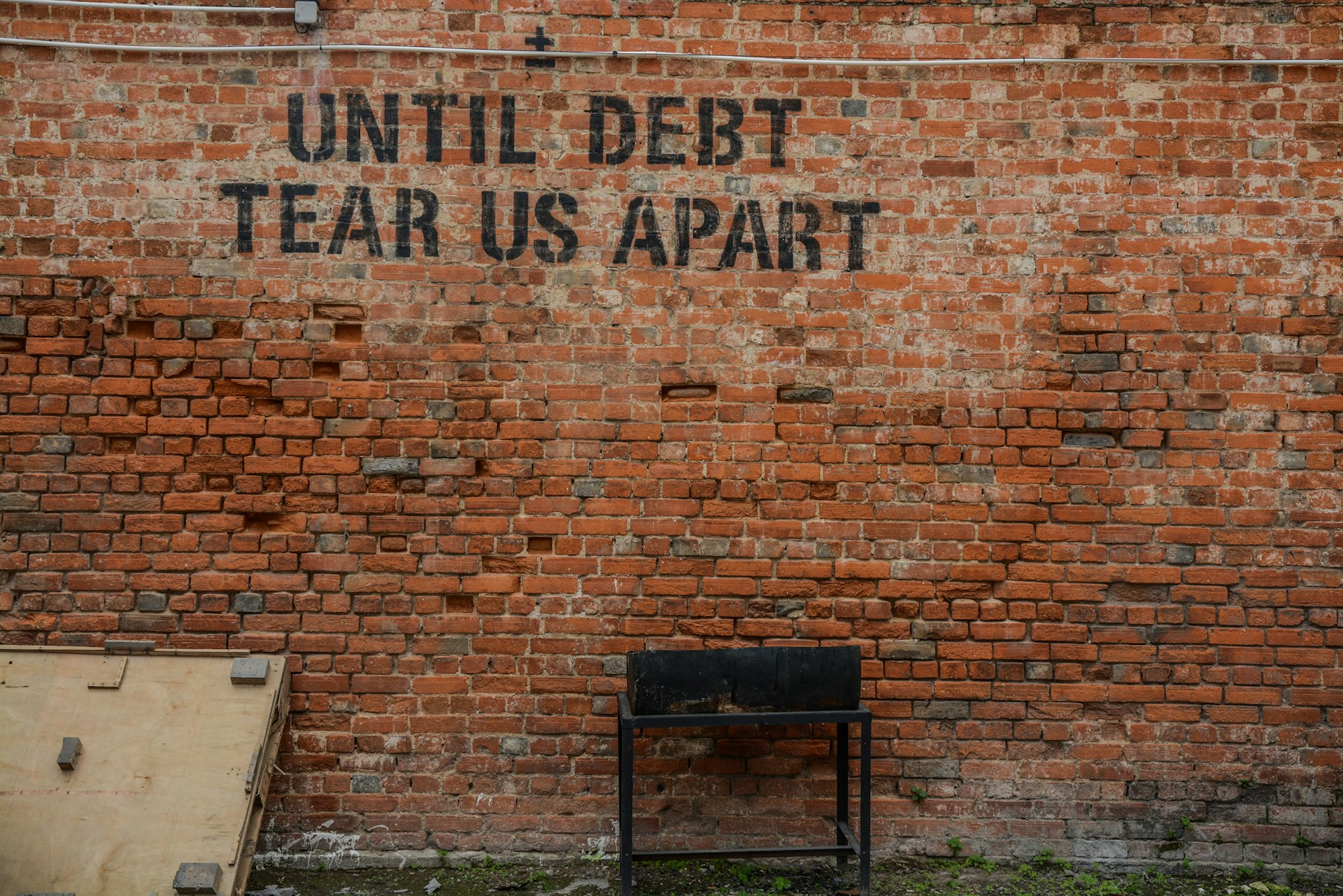
It doesn’t take much to fall into a debt trap. In fact, you can do everything right and still fall into a debt trap. Our capitalist society is designed in such a way that it’s easy to fall into a debt trap by making it a requirement to generate a credit history, where we need to incur debt.
I was never the kind of person who liked to incur debt. I’ve always preferred to pay for things up front and outright rather than put myself into debt. But that isn’t how society works. When I started my undergraduate degree, I ended up getting a credit card because I became aware of the need to generate a credit history so it’d be easier to get better deals on mortgages and stuff.
Just having a credit card isn’t a problem. Just one small charge a month and paying that off the following month is a simple way to build our credit score, until we’re struggling with money.
When I graduated from university, I couldn’t find full-time work, and I eventually lost my part-time work because of my health issues. So I had to turn to state benefits. This was where everything would start to go wrong for me.
Because of issues with getting onto state benefits, I went six months with no money. I had to borrow money for six months to pay rent, and I had to put some of my rent on my credit card just to get by. This then trapped me in debt that would take me years to get out of, and I only got out of that by borrowing money from my mum.
For several years, I had those rent payments on my credit card that I couldn’t afford to pay off, and I was just paying off the minimum. Throwing money onto a bonfire.
On a day-to-day level, I was living in my overdraft, where I was getting charged up to three times a month for each transaction that would increase my unauthorised overdraft. This just made it harder and harder to get out of the debt trap, as a single charge was just under half of what I was getting per week from my Employment and Support Allowance (ESA). Thus, getting three of those a month was crippling.
Even if I made it back into the black, the unauthorised overdraft charges would put me back into the red. To make this more manageable, whenever I thought I was going to go into my overdraft, I would just withdraw the maximum amount of money I could so I’d only get the one charge. I lived doing this delicate balancing act in order to survive, and it was no way to live.
I was fearful of any letters that came in the post, worried that they’d affect this balancing act. This was for good reason. I’d been harassed by bailiffs because of T-Mobile and because of unpaid council tax that I had no idea hadn’t been paid.
One day, out of the blue, I started getting harassed by bailiffs for council tax they said I owed for a previous place I lived, which didn’t make sense as I had been claiming council tax benefits at the time. This was because I had been on disability benefits – Disability Living Allowance (DLA) – due to my psychosis.
I was living in a different part of the country when I was getting DLA, and when the bailiffs started to harass me for money, I’d graduated from university and was now on a different set of state benefits. The council from where I used to live hadn’t talked to me about this at any point, and the bailiffs wouldn’t talk to me about this either. I had no way to get them off my back but to pay them, pay them with money I just didn’t have, but I had to anyway.
I eventually figured out that it must have been the leftover council tax that the other people I lived with should have paid but hadn’t. I had no way of knowing if they’d also tried to get the money off them; all I knew was that the bailiffs were threatening to kick down my door.
When I found myself in a similar situation again with bailiffs, I wasn’t going to take this injustice lying down.
This time, it was when internet dongles first came out, when they became very popular due to them being seen as a good alternative to the current internet on the market at the time. I don’t even know if they’re a thing anymore.
I took out a T-Mobile dongle plan rather than getting regular internet service. The deal I signed up for was that I’d have unlimited broadband, but after the first two GB of data, I’d only be able to use it off-peak. This was fine for me, as I was only working a couple of days a week as a volunteer.
However, I made the mistake of agreeing to this contract over the phone, which would come back to bite me in the arse.
T-Mobile made it their life’s work to harass me for money, money I didn’t owe them, spending most of their time claiming that this deal never existed. This went on for a whole year before they finally relented and admitted that the deal had indeed existed and that they were in the wrong.
I was being harassed by T-Mobile, and the bailiffs they set upon me during this whole mess. I’ve never trusted a company since, and I never do anything over the phone with a company because of this.
So, like I said, it doesn’t take much to find ourselves in a debt trap, and it can happen well outside of our control. I was only able to get out of my debt trap by getting help from my mum to clear the rent I put on my credit card and by working my overdraft in a way that helped me claw my way back into the black.
Thank you for reading my article about my personal experience with getting into a debt trap. If you would like this article, then you might also like to check out ‘Return To Work: My Experience With Crippling Re-entry Anxiety‘ by clicking here, which works as a companion piece. Or check out ‘Managing Debt And Returning Your Quality Of Life‘, which is a companion piece, by clicking here.