
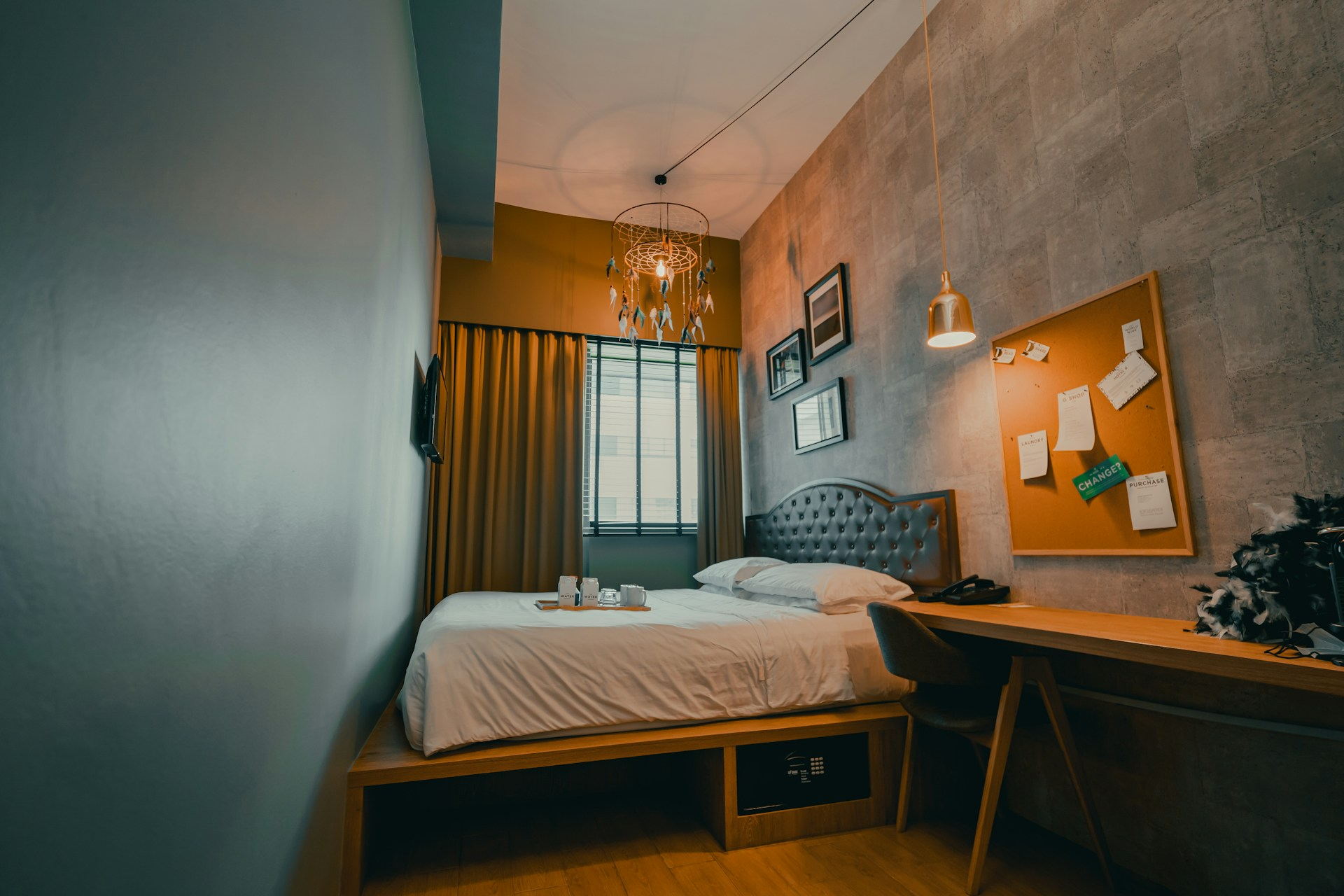
Following on from my previous article, where I talked about the nightmare of living in privately rented accommodation, I thought I’d follow up with my experience of living in a house in multiple occupation, or HMO as they’re also known.
What Is A House In Multiple Occupation (HMO)?
According to GOV.UK, for accommodation to be considered a house in multiple occupation, the situation in the property has to meet the following requirements. At least three tenants live there and jointly have shared use of the toilet, bathroom, or kitchen.
This then comes with rules on how to safely manage a house in multiple occupation as a rental property. Depending on which council the house in multiple occupation is situated in, there may be local council rules they also have to follow to rent out such a property.
Just because these rules are in place, don’t let that fool you into thinking that landlords will follow any of these rules. I’ve lived in six different houses in multiple occupation rental properties, and only one followed the rules to provide a safe living situation. That’s a whole lot of landlords breaking the law, making them little more than slumlords. But because people are unfamiliar with the laws, they get away with it.
My Experience Of Living In A House In Multiple Occupation (HMO)
The property I lived in before my current one was run by a slumlord. The conditions were so bad that I had to get the council involved, and they deemed the building unsafe. All four houses in multiple occupation rental properties I lived in before would have gone the same way as well, if I’d known to get the council involved. But I’ve talked about this situation already in prior articles. So let’s talk about the other issues with living in a house in multiple occupation.
The main problem of living in a house in multiple occupation, besides dealing with slumlords, is that they often lack a living room, because that room and any other free rooms, like a dining room, are turned into extra bedrooms to make more money. This means it’s easy to start feeling like you’re living in a prison cell when you only have one room to do pretty much everything in.
Living in a single room and spending all your time in that room, eating, sleeping, relaxing, working, etc., is lonely and isolating. For me, for a while at least, this would feel safe, because by and large, all my mental health problems are caused by interacting with other people. It was easier to stay in my room feeling lonely and depressed than to deal with the anxiety of being around other people.
However, you then have to deal with the anxiety of bumping into the other tenants living in the house in multiple occupation, which can present a lot of other problems. Because more often than not, you’re living with strangers, rather than people you knew beforehand.
When my anxiety disorders were at their worst, and I was struggling with psychosis, I would try to avoid bumping into the other tenants by making sure no one was in the bathroom or kitchen before using those rooms. This didn’t always work out as I hoped.
The size of the room you’re renting in a house in multiple occupation also makes a big difference. There have been times when I’ve been lucky enough to rent a big enough room to fit a double bed, a desk, and a sofa. But there have also been times when I’ve had no choice but to use my bed as a sofa.
I’ve also seen friends living in a house in multiple occupation where they’ve only had a room big enough for a single bed, and somewhere to put their clothes. Now imagine living in a room that small, without access to a living room to socialise. How bleak and miserable would that be?
When I had a sofa, it helped separate my sleeping space from my relaxing space. It wasn’t perfect, but it helped. Whereas the times without the space for a sofa really destroyed my sleep, causing me sleep deprivation.
A key piece of advice when it comes to sleep hygiene is to keep your bedroom a space reserved for sleeping, sex, and changing, something that you can’t do when living in a house in multiple occupation. This would make my insomnia a nightmare to handle as a result.
At the moment, I’m being forced to use my bed as a bed, a dining table, and a sofa, and my insomnia hasn’t been this bad in years. I barely sleep at night, and I struggle to stay awake during the day when trying to watch TV while using my bed as a sofa.
I always get the same sleep hygiene advice when seeking help for my insomnia. I’m always told not to have any electronic devices in my bedroom and to treat my bedroom as a space for only sleep, sex, and getting changed.
But unless I want to live without a TV, that’s just not possible. I wish someone would create a sleep hygiene plan specific to people living in a house in multiple occupation. Because I’m not lucky enough to be able to afford a house or flat to live in where I can separate things like this.
Even before I started working, where I now work from home, living in a single room to do everything, day in and day out, can quickly become problematic. When my depression was at its worst, I would just wear the same PJs all day and night for months at a time, just moving from my bed to my sofa and then back again. That would be my life, day after day.
Eventually, I took action and established a getting-up and sleep routine to make sure I looked after my basic hygiene needs. This also helped with my depression.
When I was going through the starvation stage of my eating disorder while living in a house in multiple occupation, there would be times when I realised I had gone weeks without speaking a single word.
Because I wasn’t bingeing on chocolate at the time, I wasn’t going to the shops where I’d at least say “thanks” to the shopkeeper. And because I wasn’t eating much, I didn’t need to go to the supermarket that often. Even when I did go to the supermarket, I’d use the self-checkout to avoid talking to someone.
It’s quite easy to become isolated and cut off from your social support network when living in a house in multiple occupation. Those four walls will become all you know if you let it, and the longer you stay in there, cut off from the world, the harder it’ll become to leave.
Covid
Covid has to be one of the worst experiences I had when living in a house in multiple occupation. None of the UK government’s advice made sense if you lived in a house in multiple occupation. This made it really hard to know how to follow the rules, and in the house in multiple occupation I was living in during covid, this led to fights and arguments breaking out between two of the other tenants.
The experience of living in a house in multiple occupation during covid wasn’t too bad for me on an individual level. At that point, I liked being on my own, and every fibre of my body wanted me to be left alone.
But being forced to separate the two tenants and dealing with the police wasn’t fun. I can only imagine how hard this must have been for people in the same situation who don’t have my mental health issues. I know one of the tenants started drinking excessively, and they were already drinking at the level of a dependent drinker.
Housing
In an ideal world, there would be rules regarding minimal living spaces for tenants so they wouldn’t have to live like they’re living in a prison cell. But there isn’t. The only real way to combat living in such a situation is to live with people you already know or spend as little time in your single room in the house in multiple occupation as possible.
But that’s hard to do without spending money. If we had the money and the rent was reasonable, more people would choose not to live in a house in multiple occupation in the first place.