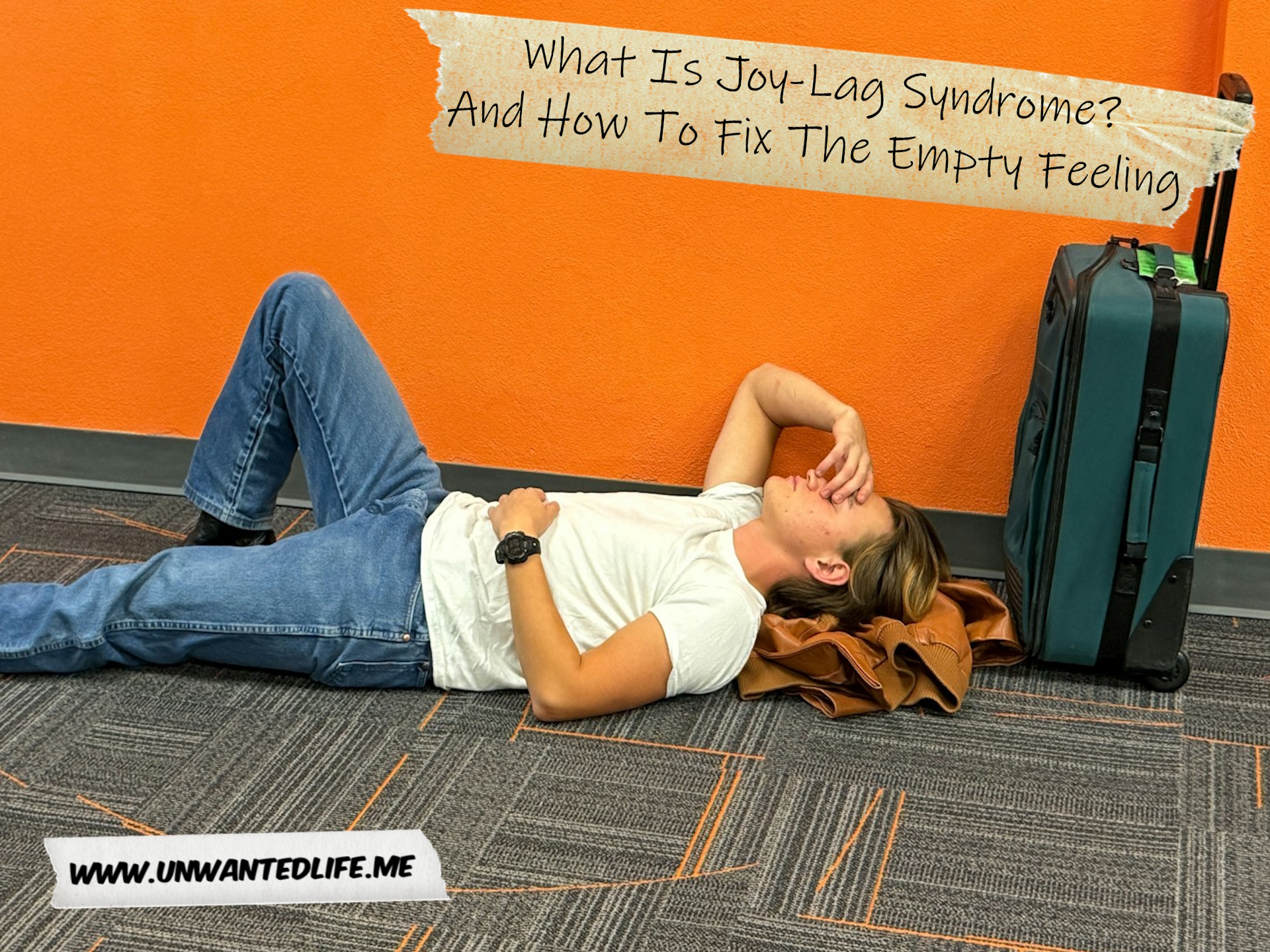
When we experience joy-lag syndrome, it can be a discombobulating moment. The things we relied on to spark joy might be delayed or might not come at all. This makes it an interesting phenomenon that I want to discuss in today’s article. I hope you find it interesting as well.
What Is Joy-Lag Syndrome
When we’ve been through intense burnout, trauma, or chronic stress, our nervous system adapts to protect us (Bishop, 2025). It becomes highly efficient at operating in an emergency state. Because of this, when things finally calm down, and we have a moment for ourselves, or when a genuinely good moment happens, our bodies don’t automatically know how to shift into “enjoyment” mode.
Instead, it experiences a lag—a profound disconnect where joy feels unreachable, foreign, or even unsafe. Because of this, our brains can struggle to process or accept positive feelings after a prolonged period of survival mode.
So seeing our paints and canva, our Lego sets waiting to be built, our Warhammer collection, or whatever it is that would usually trigger a positive response, even before actually doing anything, has now gone. That trigger that would start to elicit joy has lagged out. But it may come once we start engaging in the things that bring us joy. Hence, joy-lag syndrome.
If we’re still unable to experience joy even when doing the things that would normally cause us to feel happy, then this could mean that we’ve developed anhedonia. Anhedonia is the inability to enjoy anything or experience pleasure, and it is best known as a symptom of depression, although not exclusively with depression. (Psychology Today, n.d.). Consider this the end result of joy-lag syndrome if something isn’t done.
Why We Can Experience Joy-Lag Syndrome
When recovering from chronic stress, trauma, or burnout, several survival mechanisms can block the immediate experience of pleasure:
Emotional blunting
To cope with high levels of stress or pain, the brain turns down the volume on all of our emotions. Unfortunately, we cannot selectively numb bad feelings without also numbing the good ones. The result is an emotional flatness where we go through the motions of life but feel disconnected from actual happiness (Bishop, 2025).
This is something I experienced in my twenties when I became more suicidally stable. I was no longer fighting extreme emotions that could flip like turning on a light, but at the same time, I couldn’t really feel anything else either. This protected me from my borderline personality disorder (BPD), but also robbed me of much of my happiness.
The calmness trap
When our system is used to chaos or constant pressure, absolute calm feels unnatural. Our brain might misinterpret quiet, peaceful moments as a sign that something bad will happen, triggering anxiety instead of relaxation. In other words, we’re stuck waiting for the other shoe to drop.
The deficit of trust
If our body has been in defence mode for a long time, it struggles to trust safety. Hence, waiting for the other shoe to drop in situations that are calming or would normally be interpreted as happy. Annoyingly, allowing ourselves to feel joy requires letting our guard down, which a protective, traumatised nervous system will initially resist.
Pleasure guilt
There can often be an internal conflict or self-worth barrier. We can convince ourselves that we don’t desire or haven’t earned the right to feel good. Thoughts like “Do I deserve to feel good?” or “What if this doesn’t last?” function as a psychological brake system, cutting off a positive experience before it can settle in.
I’ve had a few clients who’ve struggled with pleasure guilt, but that also stops them from doing basic self-care to manage stress.
Joy-lag Syndrome Retraining Guide
Because joy is a physiological skill as much as an emotion, bridging this lag can require a gradual, body-first approach rather than trying to force a happy mindset. Because happiness isn’t a choice, all we can do is try things that can help lead to happiness.
We can also challenge such thoughts using thought challenges, like reframing and putting our thoughts on trial.
Remove the pressure
Above all, remember that we can’t force happiness, and trying to do so just feeds the issue that caused the joy-lag syndrome in the first place. Don’t add stress to our already stressed bodies. Just work towards creating an environment where happiness has a chance to return; that’s all we need to do.
Embrace playfulness
As we become proper adults, we often feel we have to act accordingly. But we don’t. The happiest people are those who feel free enough to be silly, to engage in playfulness. Even animals do this. Try putting on a silly voice, doing a walrus impression with two straws, or poking our partner with a coffee stirrer from a local coffee shop.
It might seem foolish to do, but don’t let that fool you. It’s enriching for the soul and can be a great way to bond with others as well. My partner and I do all this, but the one we do the most is hide the fake poo in each other’s stuff. We’ve been doing this for several years now, and it’s come on holiday with us a few times as well.
Professional support
If the joy-lag syndrome is persistent or escalates to anhedonia or depression, know that there are options available, such as medication, therapy, or a combination of the two. Reach out for support from our GP or a therapy service. It’s what they’re there for, so use them to improve our quality of life.
Summary
The joy-lag syndrome can be a good indicator that something is not right with us. Whether that’s burnout, stress, trauma, or something else, there are steps we can take to manage and overcome our joy-lag syndrome before it escalates further. Embracing the little things that can bring us joy and engaging in playfulness can be one road back to being able to feel happy again.
As always, leave your feedback in the comments section below. Also, please share your experiences with joy-lag syndrome in the comments section below as well. Don’t forget, if you want to stay up-to-date with my blog, you can sign up for my newsletter below. Alternatively, click the red bell icon in the bottom right corner to get push notifications for new articles.
Lastly, if you’d like to support my blog, please find the PayPal and Ko-fi donation payment options below. Until next time, Unwanted Life readers.
References
Bishop, J. (2025, July 14). When Joy Feels Out of Reach: How to Reconnect with Pleasure After Burnout or Trauma. Genesis Counseling. Retrieved from https://genesiscounselingflorida.com/reconnecting-with-joy-after-burnout-or-trauma.
Psychology Today. (n.d.). Anhedonia. Psychology Today. Retrieved from https://www.psychologytoday.com/gb/basics/anhedonia.
Oh wow! I have Borderline Personality Disorder too! It definitely can be a difficult disorder to navigate when it comes to emotions. I also have depression. I was very afraid of going on psychiatric medication for my depression. I was scared that I would develop Anhedonia on the medication, but I’ve been on antidepressants for a while now and I’ve been fine. The medication has been very helpful, and I’m very relieved and happy about that. Thankyou for sharing this important post!
I’m glad you’ve found the use of antidepressants useful. Thanks for sharing
When my friend Astrid wrote about “Healing Past Hurts”; the subject of “Joy and the fear it brings” brought it up.
[a lot of people with post-traumatic stress disorder – and the chronic and complex varieties – relate to the joy-lag concept!]
She felt a sense of essential unworthiness.
[the lack of deservingness – George Blair-West, Queensland psychiatrist, writes about “deservingness” in the book THE GIRL IN THE GREEN DRESS – I also recommend his words on Betrayal Trauma and on Favouritism and Disfavouritism especially in sibling and wider family relationships
Charlie Dee: I hope you are feeling it easier to access microjoys.
My other friend Gillian created a character called Little Bean who brings the glimmers to her world through cartoon and graphic form.
Also Richard Devine wrote about the experience of going on antidepressants as a social worker.