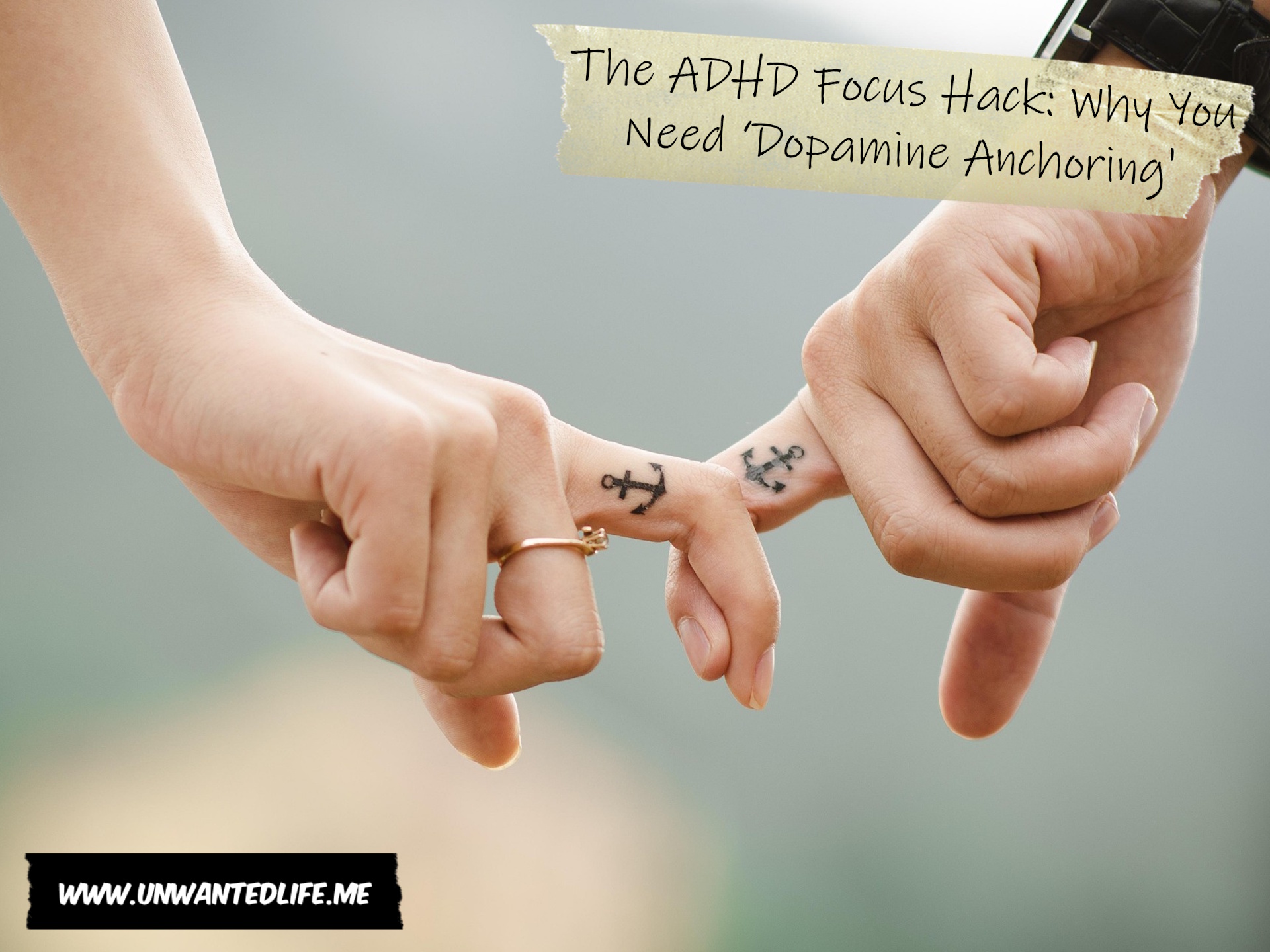
Although dopamine anchoring seems to be doing its rounds on TikTok at the moment, that’s not where I came across the concept, as I don’t use TikTok. But because it’s doing its rounds on TikTok, it felt like a good time to explore this hack. So I hope you find this exploration insightful and useful.
What Is Dopamine Anchoring
As reported by Nazish (2026), dopamine anchoring has been blowing up TikTok as the latest productivity fix, which is essentially a modern spin on classical conditioning. Classical conditioning is the conditioning method used by Pavlov in his dog experiments (Cherry, 2026). The concept is simple. We pair dull or difficult tasks with things we enjoy to gradually make them feel less like a chore.
This is a simple trick that takes advantage of our brain’s structure, whereby dopamine anchoring leverages our brain’s dopamine and reward system through the use of building associations between boring tasks and something we find fun.
Thus, dopamine anchoring can be used as a self-help technique that leverages our reward system to make dull or challenging tasks feel more manageable and even enjoyable.
This works because dopamine is a neurotransmitter linked to motivation, anticipation, and the desire to seek out rewarding experiences. Its release often happens before we receive a reward, creating a feeling of wanting and drive.
Because of this, dopamine anchoring is a technique that can be very useful for those with attention deficit hyperactivity disorder (ADHD) or who otherwise struggle with procrastination (Bologna, 2025). Thus, helping us to reduce the number of tasks we avoid. In that regard, it’s a lot like a dopamine menu.
How To Hack Our Brain Using Dopamine Anchoring
By repeatedly doing an uninviting task (e.g. cleaning or answering difficult emails) while engaging in an enjoyable activity (e.g. listening to our favourite podcast, listening to music, or having a special treat), our brain begins to associate the task with the pleasurable dopamine surge from the reward.
Over time, the dreaded task itself becomes a cue that triggers the anticipation of the reward, making it less aversive and easier to start. We are “anchoring” the positive feeling to the routine activity.
According to Dr Singh, who was talking to Nazish (2026), this technique is helpful, especially in overcoming procrastination and building routines.
However, we should probably learn not to overuse this technique, limiting its use to a few select tasks we have trouble starting (Bologna, 2025). This is because we might lose intrinsic motivation over time due to this over-dependence on dopamine anchoring (Nazish, 2026).
Dopamine Anchoring Tips
It can be useful to match the reward to the difficulty level of the task when using dopamine anchoring (Nazish, 2026), so we don’t overuse one method, and it lose it’s affectiveness.
Another way to use dopamine anchoring is to use so-called weird anchors, such as smelling an essential oil or eating three strawberries (Bologna, 2025). As our brains often prefer novelty, especially the ADHD brain. So we should keep in mind the idea that variety is the spice of life, and that weird and strange can be useful to us.
It can also be useful to keep our anchor rewards as something that’s simple, realistic, and accessible (Nazish, 2026; and Steber, 2025). It’s also important to consider that, to keep our dopamine anchoring technique most effective, we should reserve the rewards for the tasks we struggle to start (Steber, 2025).
This is because the ultimate goal is for intrinsic motivation (getting satisfaction from the task itself) to eventually take over, reducing the need for constant external rewards. Over-reliance can weaken our natural drive. However, if you’re anything like me, that might not happen concerning intrinsic motivation.
Practical Examples Of Dopamine Anchoring
Environmental anchoring
Doing a boring task at a coffee shop (Wake, 2026) or outside. This change of environment can create a novel experience that can help get us started.
Cleaning the house
Listening to our favourite album, podcast, or audiobook exclusively while we clean. The more uplifting the better.
Working out
Only watch a specific, engaging streaming show or YouTube channel during our exercise time.
Social anchoring
Do a video call or a phone call with a friend during a dull work block (Wake, 2026), such as talking to someone as we clean.
Studying
Rewarding ourselves with a small, healthy snack, a five-minute social media break, or some other short glimmer after completing a specific chunk of work. The Animedoro method, which is a fun twist on the Pomodoro technique, can come into play here.
Sensory anchoring
Having a specific playlist to use to help with motivation for boring tasks. I’ve started creating a playlist of songs I can sing along to, which I plan to use with boring household tasks.
Waking up early
Having a special, high-quality coffee or tea that we only drink in the first 15 minutes of our morning routine, if we get up early and on time as planned.
Summary
Dopamine anchoring is another tool to put in our toolbox to help us do the less desirable things in life, like chores. Another useful tool brought to us from the work with people with ADHD. A lot of things are transferable from that field of research and coping strategies into the field of mental health.
I refer to dopamine anchoring as another tool for our toolbox, because it alone won’t help with all the things we struggle with (Bologna, 2025). If a task is too big, breaking it down into chunks is always my go-to approach, with the bonus of allowing me to feel multiple senses of achievement as I finish each chunk.
Therefore, it could be better to combine dopamine anchoring with other techniques, such as a dopamine menu, SMART goals, ‘doing it stupid‘, etc. What other techniques would you pair dopamine anchoring with?
As always, leave your feedback in the comments section below. Also, please share your experiences with the dopamine anchoring approach in the comments section below as well. Don’t forget, if you want to stay up-to-date with my blog, you can sign up for my newsletter below. Alternatively, click the red bell icon in the bottom right corner to get push notifications for new articles.
Lastly, if you’d like to support my blog, please find the PayPal and Ko-fi donation payment options below. Until next time, Unwanted Life readers.
References
Bologna, C. (2025, July 2). “Dopamine anchoring” is a genius hack for actually getting things done. HuffPost UK. Retrieved from https://www.huffingtonpost.co.uk/entry/dopamine-anchoring-hack-productivity_l_6861f1ebe4b0a244c71334f3.
Cherry, K. (2026, February 02). Pavlov’s Dogs and the Discovery of Classical Conditioning: What Pavlov’s famous experiment taught us about learned behavior. Verywell Mind. Retrieved from https://www.verywellmind.com/pavlovs-dogs-2794989.
Nazish, N. (2026, February 4). Dopamine habits that can support motivation, according to experts. Verywell Mind. Retrieved from https://www.verywellmind.com/dopamine-anchoring-for-motivation-11897853.
Steber, C. (2025, August 11). “Dopamine Anchoring” is a TikTok-Viral productivity hack. Bustle. https://www.bustle.com/wellness/dopamine-anchoring-productivity-hack-tiktok.
Wake, H. (2026, February 2). Therapist explains how the viral ‘dopamine anchoring’ can be the best hack for conquering chores. Upworthy. Retrieved from https://www.upworthy.com/dopamine-anchoring-explained.
Oh … this is so cool! From now on, I should listen to music or audio book when cleaning the house. I always hated house chores. But I do it because I have to.
PS: X block my account. But I still want to keep in touch with my fellow bloggers. So whenever I comment on your post, do know that I also have a new post for you to check out ya. Tq ^_^
It can make such tasks easier.
I get banned by XTwitter all the time, but it’s usually just a quick check to see if you’re a bot to get your account back
This is great! I don’t have ADHD, but some of my friends do. Will share this post with them.
https://embracethepandemonium.wordpress.com/
I hope they find it useful, but it is also useful for people without ADHD