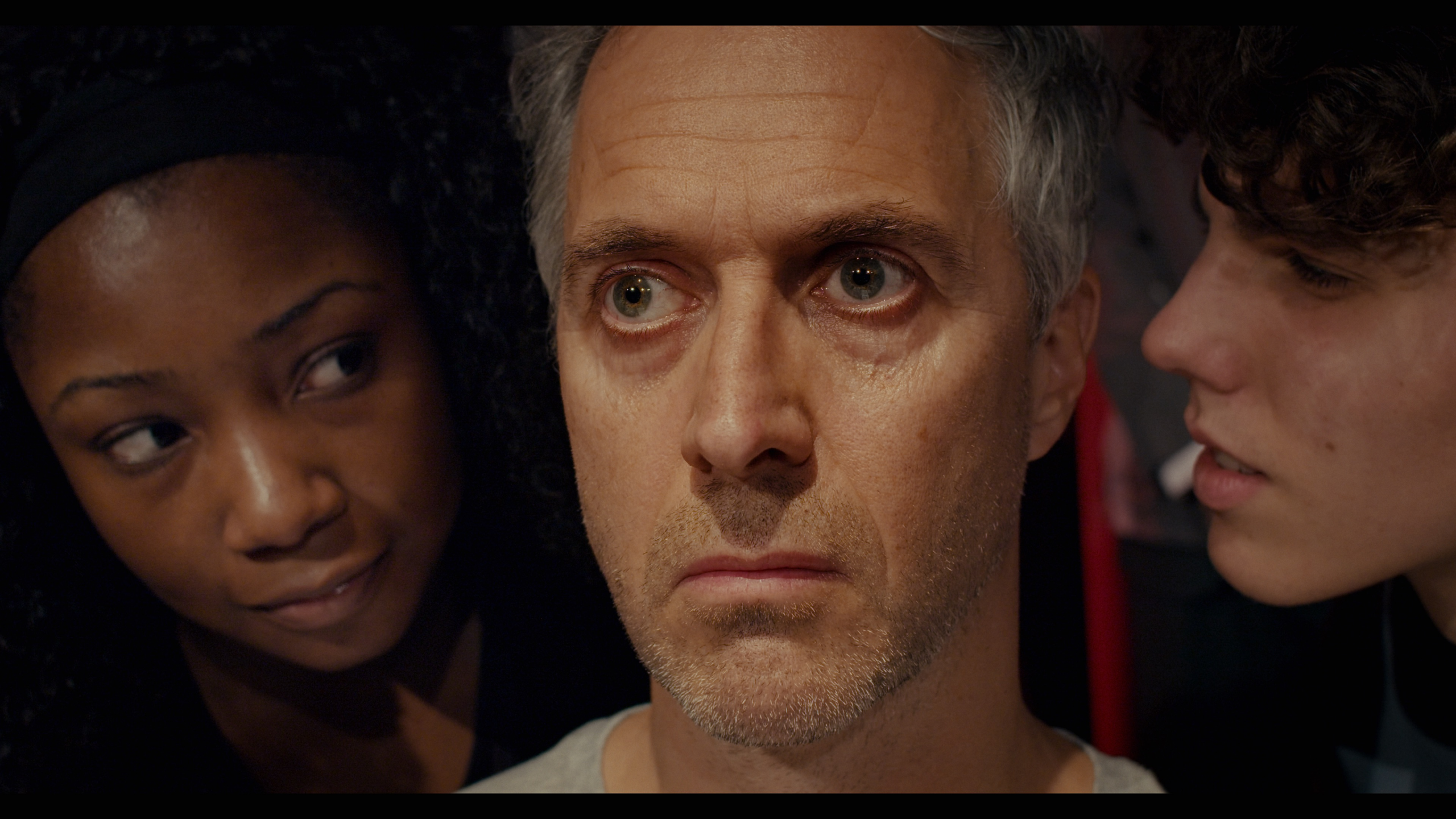
For a couple of years, I’d been working on a psychosis art project about people’s lived experiences of psychosis. The project features my lived experience, along with four other people sharing their lived experiences. We all got to direct a short film about what it’s like to experience our psychosis. The films were collectively known as The Directors. It took a while to bring it all together, but the end results were amazing.
Volunteering To Participate In The Psychosis Art Project
While looking at a few mental health charity websites in the UK looking for volunteer roles and other ways I could give back and help people avoid the life experiences I had, I came across a recruitment for a psychosis art project with Artangel and the artist Marcus Coates. The project was to create films that would depict what it was like to experience psychosis.
Simply put, it was a psychosis-lived experience film project. So I got in touch and told them how my psychosis affects me, asked if that would be suitable for their project, and told them how I’d love to take part. I was fortunate enough to be selected to take part in the lived experience psychosis art project.
Participating in the lived experience psychosis art project has had a significant and positive effect on my life. An experience I really enjoyed, and one I’ll always remember.
Creating My ‘The Directors’ Film For The Psychosis Art Project
Over the course of about a year, I worked with Marcus Coates to see how we could translate my lived experience of psychosis into a film that would make sense as a concept. At first, I wasn’t sure how we’d be able to pull this off, because it’s never been something people have been able to wrap their heads around when I’ve told people, even my therapists. It was especially difficult regarding the intensity of it all.
To help with this, I shared some of my blog articles (which you can find here and here) that highlighted my experiences with psychosis. Thanks to Marcus Coates’s experiences with doing projects like this, he was able to create ways that would bring my experience to life on film.
With the first hurdle out of the way, and a couple of years into the psychosis art project, we began filming my contribution over a weekend, a weekend during the covid pandemic. Because of this, we had to do the filming while meeting all the legal covid guidelines at the time. As you would expect, this added an extra layer of difficulty, but doing daily covid tests over the weekend meant we could keep everyone safe.
Turning my lived experience with psychosis into a film wasn’t an easy task, but Marcus Coates had already come up with several ways to mimic all my experiences. But I have to admit, I was still a little unsure if this would translate well or not.
Marcus Coates plays the main role in all the lived experience director films. This was so they could add an element of a person who hadn’t experienced psychosis, trying to understand psychosis through the experience with empathy. It also added a layer of protection for us directors, although I wasn’t personally worried about that.
Although Marcus Coates is the main person in the films we created as part of the project, you do hear the voices of each of the lived experience directors in the film they were creating with him. For mine, nothing had been planned about our interactions in the film as we talked to each other, making it truly an ad-lib, authentic moment.
At the end of filming, Marcus Coates and I were interviewed by Michael Morris, who was Artangel‘s Associate Director and helped make this project what it is. The interviews, if I remember correctly, reflect our experiences of the weekend filming, plus other important questions. The interview can be found here. Of course, there were a lot of great people involved at every stage of this project. You can find a list of the cast and crew here.
Meeting The Other Lived Experience Directors
As part of the lived experience psychosis art project, I was able to join the other lived experience directors, whom I hadn’t met until then, to record an interview segment for the project. And true to form, I had started to lose my voice.
This happens a lot to me, but I never know why. My voice just fluctuates like this, and it really bothers me. I’m very self-conscious about my voice because this keeps happening. I haven’t heard my natural voice in over a decade.
Anyway, we all met up for this interview and sat in a circle, mic’d up and answered a series of questions, which were going to be used as part of the promotional content for the lived experience psychosis art project. I was surprised to be the only minority among the five lived experience directors, but at least that meant there was a perspective from someone who wasn’t White.
The interview itself went well, and the other participant directors all seemed nice. But the weird thing was, none of us had seen the final version of our own short films, nor had we seen each other’s films. This made the interview a little weird.
Since completing the film, they showcased The Directors exhibit across several locations in Pimlico. One was shown in a bedroom rented in a nearby block of flats, another in a basement room of a GP surgery, and mine was in a large room provided by the Churchill Gardens Residents Association.
As I wrote parts of what became this article for my members, I was on my way to the press screening of our films, because I couldn’t make the opening day event. This was the first time I saw the final version of my film and the films of the other participant directors. Unfortunately, I wasn’t able to see all five films on the day because of work, only getting to see four of the five.
Turns out, my concerns weren’t warranted about whether the film would work or not, as every time I’ve watched the film, I still find myself being affected emotionally. My film was in the biggest room, and the use of surround sound really helped you get a peek inside my experience.
It was a really powerful film that still makes me feel weird to watch it. The other films were also very good but occasionally lacked the impact and intensity I was expecting to get from their lived experiences. Nevertheless, the films are powerful in their own right.
One of the other participants’ condition caused them to believe their loved ones had been replaced by someone else. Another had paranoid schizophrenia. But it seems it may have been harder to translate that into a film.
The closest thing I can compare to my lived experience and the film I directed is the Apple TV+ show, Physical. Although that show is about someone’s experience with an eating disorder, the intensity of their inner voice mimics mine when struggling to manage a psychotic episode.
It was great to take part in this lived experience psychosis art project, with Artangel and the artist Marcus Coates, especially as the reporters who came to check out the pre-release screenings of the films and subsequent interviews all asked the same question. They all wanted to know if it was ethical to do a project about psychosis with people who have lived experience. Like we’re incapable of making our own choices.
Whenever I’ve been asked about this, I’ve always mentioned how we responded to a request on a mental health charity site, meaning we volunteered for it. They didn’t drag us out of a mental health hospital kicking and screaming. I also highlighted that just because someone has a mental health condition, that doesn’t mean they’ve lost agency over making their own decisions.
The Psychosis Art Project Legacy
After completing the project, I thought we were done, but then I got asked to take part in an interview about the project for a psychology journal. This might be the only time I’ll feature in one, so I agreed.
The interview was composed of me and the artist Marcus Coates, rather than all the other lived experience directors. It only lasted an hour, but I’m glad I took part as I got to challenge, yet again, the main criticism of the films.
For some reason, every interview regarding this project Marcus Coates and I have been involved in has been asked the same question, which is whether they took advantage of these people with psychosis or words to that effect.
Again, this was something I wanted to get across as being ignorant and why projects like this must exist. This interview allowed me to do that as someone who worked on the project who happens to have lived experience of psychosis.
All of us involved in the lived experience psychosis art project thought we’d be done once the exhibition was over. Besides that extra interview, I thought that would be it as well. But the films were received with such high praise that the project took on a life of its own as requests came in to use the films as part of educational programmes and art exhibitions from across the world.
Because of this, Artangel created a website called ‘What’s Going On?‘, which is based on a line from the film I directed. This allows anyone to visit the site and request access to those films by completing a form, allowing them to have instant access. The interview conducted with all five lived experience directors is also available there, along with a lot of other resources.
Since the exhibition and that initial interview, I was invited to take part in a panel discussion at King’s College London for World Mental Health Day. As part of the panel discussion, my film was shown first, and then a Q&A was done afterwards with the panel.
The panel was made up of me, Marcus Coates, and two clinicians and experts in psychiatry, one of whom was Preety Das. Unfortunately, I can’t remember the other guest speaker’s name and could not find their name on the content used to promote the panel discussion.
I’d never done anything like this before, because public speaking hasn’t been something I’d sorted out, and was something I thought I’d struggle with. Having anxiety and all. It turned out I was better at it than I thought, and once I got into the flow of it, everything went well. Except for my voice, which I started to lose just before the event.
The films are now being made available to organisations to help educate healthcare and mental healthcare professionals all over the world. It’s been amazing to take part in this project, and I hope I can be a part of more projects like it. But most of all, I’ll keep supporting The Directors for as long as I can.
The films are set to be shown in a few places around the world, with the films being shown this year in Te Tuhi, New Zealand; Live Art Denmark – København, Denmark; TOASTER Festival, Copenhagen; and Leicester Gallery, De Montfort University.
I’ve also been informed that several universities and hospitals have screened our films, held discussions, and added them to their training sessions. These were: University of Washington, SPIRIT Lab; King’s College London; University of Missouri-St. Louis, Missouri Institute of Mental Health; De Montfort University, Leicester; Leicester University; Royal Free Hospital, London; and University of Parma, Italy.
But it doesn’t end there. Because of the panel discussion and the showing of my film, Marcus Coates and I were invited to put on an event for the Royal Free GP Speciality Training Scheme, which we did. We started by talking about the films and how they were created; we showed my film and one of the other films from The Directors, we did a Q&A, and also did a role-playing session with the budding GPs in training to help them experience a tiny percentage of what my psychosis is like.
This event has also led to The Directors being included in the School of Medical Education 1st year curriculum, King’s College London; included in the online and in-person resources for NHS Psychosis Training for the NHS Foundation Trusts in England; made available in the online training hub for the East London NHS Foundation Trust’s adult social care; featured on the Mental Health Implementation Network blog (including reviews and opinions from clinicians and psychologists); added to staff training at Compass Health Network, Missouri (who provide behavioural health services to young adults ages 13 to 25 experiencing First Episode Psychosis); and been incorporated into a staff workshop for trainee GP’s at Royal Free Hospital, London (which was the event I just mentioned above).
I also did a short interview with Professor Sally Marlow for The Psychologist, who was also the person who chaired the panel discussion, with the help of Professor Matthew Hotopf CBE, who introduced the event.
Professor Sally Marlow suggested I look into joining a Lived Experience Advisory Board and made an introduction, which I’ve followed up on. I hope something comes of this, as I’d seriously like to put my lived experience to more use, and hopefully help people in the process.